
Hardware is back: how great power competition and AI are reshaping hardware’s primacy
May 18, 2026
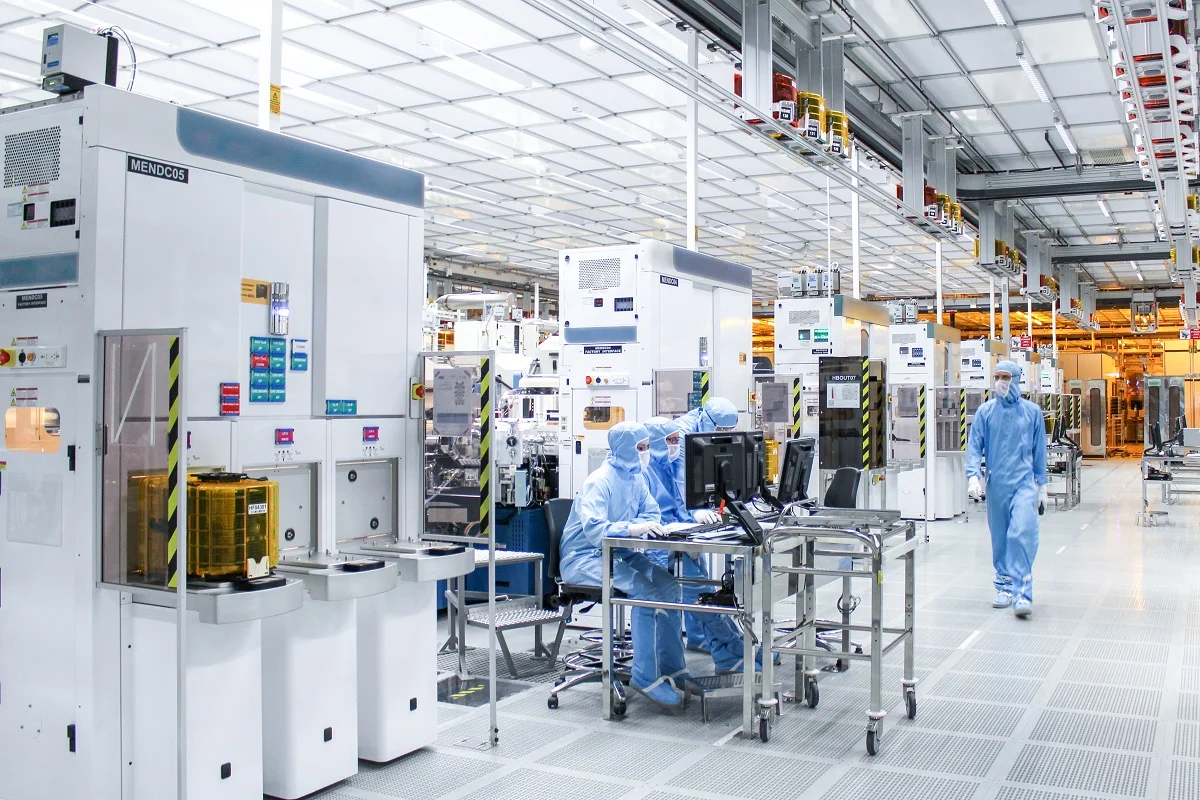
Last November, the Pentagon reformed its procurement methods to prioritize industrializable systems over small-batch top-notch equipment. While this doesn’t impact quantum yet, it’s a signal that manufacturability now matters as much as performance.
Why such a reform?
The post-Cold War model separated innovation from production: western economies designed and China and others scaled high-TRL technologies. That division is collapsing. In an era of great power competition, the ability to surge physical production is itself a strategic asset.
Our capacity to deter adversaries and competitors no longer depends only on scientific breakthroughs or new designs, but on the ability to manufacture these innovations at scale.
Industrial depth is no longer a consequence of technological leadership. It is becoming its foundation.
With AI progress in software, hardware will become our main bottleneck
The acquisition of OpenClaw by OpenAi has shown the stunning progress of AI code generation. A single engineer can now create a project worth billions in just a few weeks!
AI is dramatically accelerating how fast software can be designed, tested, and deployed.
But as code becomes commoditized, the value of a company shifts to what AI cannot automate.
That is why a company’s ability to create new industrial capacities or implement new tech in existing plants or fabs will become a defining driver of its long-term value and strategic relevance.
In this new landscape, competitive advantage will increasingly depend on controlling physical production, not just writing code.
What this means for quantum
Quantum computing is now entering this same transition. The question is no longer only which technology can demonstrate the best qubits, but which can rely on the strongest industrial ecosystem to scale.
Scientific performance remains essential. But without a credible path to manufacturing at scale, it cannot translate into real-world impact.
At Quobly, we have embedded semiconductor industrial constraints since day 1. With our partner STMicroelectronics , we already produce quantum chips in existing fabs.
This approach allows us to align scientific progress with manufacturability, reproducibility, and long-term scalability.
At a time of great supply-chain uncertainty and exponential AI progress in software generation, Quobly is building quantum computing with this industrial reality in mind, enabling Europe to compete in one of the most strategic technological races of the coming decades.
Because technological leadership will ultimately belong not to those who invent quantum computing, but to those who can build it at scale.